How to care for your wedding dress before and after the wedding
From collecting it at the salon, through the night before the wedding, to years in a box of tissue paper — how to transport, smooth, clean and store your wedding dress so it looks flawless on the day and stays a beautiful keepsake afterwards.

- Collecting your dress and getting it home
- Before the wedding: garment bag, hanger and the right spot at home
- How to smooth a wedding dress: a steamer, not an iron
- On the day: the train, an emergency kit and small mishaps
- Cleaning your wedding dress after the wedding
- Storing a wedding dress long term
- Sell it or keep it: what to do with your dress after the wedding
- FAQ
Your wedding dress is probably the most delicate thing you will ever own. Tulle creases at a glance, satin and silk soak up moisture, and crystals and sequins are held on by glue and thread that dislike heat. The good news is that you need no special equipment to get it through the preparations, the whole wedding day and the years that follow. A few simple habits are enough — here they are in order, from the moment you collect it at the salon to the box you keep it in.
Collecting your dress and getting it home
You will usually collect your dress after the final fitting, typically a few days to a week before the wedding. Give yourself time and check everything calmly:
- the length with your shoes on — bring the shoes you will wear and walk around the salon in them;
- the fastening — zip, buttons, hooks or corset lacing; ideally the person helping you on the day sees how it works right there;
- bustling the train — if your dress has a train, your stylist will show you how to pin it up for the dancing;
- the embellishment — a loose bead or a stray thread is far better spotted at the salon than on the morning of the wedding.
For the journey the dress goes into a breathable garment bag. In a car, lay it flat across the back seat or hang it from the grab handle above the door, with the train folded loosely inside the bag — never rolled up in the boot. Don’t leave it in a hot car, even for ten minutes: heat weakens the glue behind crystals, and condensation can leave water marks on satin.
Before the wedding: garment bag, hanger and the right spot at home
Between collection and the wedding, the dress should simply hang in peace. A few details make all the difference:
- A breathable bag, not plastic. Cotton or non-woven fabric keeps out dust and light while letting air through. Plastic traps moisture, and over time the fabric may yellow.
- A wide hanger and the hanging loops. Most dresses have ribbon loops sewn inside, and the weight of the skirt should rest on them rather than on thin straps. Otherwise the straps and the lace over your shoulders can stretch.
- Dark, cool and dry. Keep it away from radiators, sunlight, cooking smells and smoke. A bedroom wardrobe is a better home than a hook in a busy hallway.
- The train off the floor. If the dress is longer than your wardrobe, fold the train loosely into the bag rather than letting it lie on the floor.
Tempted to try it on once more for a friend? Do it with clean hands, no body lotion and no make-up, and hang it straight back afterwards. Every time you step into it you risk snagging the tulle or leaving foundation on the neckline.
How to smooth a wedding dress: a steamer, not an iron
Creases from the journey are perfectly normal, and many drop out on their own once the dress has hung freely for a day or two. For the rest, a handheld steamer is the safest tool: keep it a hand’s width or so from the fabric, work from the inside where you can, and test it first on a seam allowance or an inner layer of the skirt.
| Fabric | How to smooth it | What to avoid |
|---|---|---|
| Tulle, organza, chiffon | Hang for a day, then steam from a distance | Irons, and touching it with the steamer head — tulle melts in a second |
| Satin, mikado, crepe | Steam from the inside, or a cool iron through a cotton cloth | Steam held close on the right side — it leaves water marks |
| Lace | Gentle steam from a distance, smoothed by hand | Pulling threads, or an iron without a pressing cloth |
| Sequins, beads, crystals | Hang freely; if needed, steam from the inside | Heat or steam straight onto the embellishment — the glue gives way |
Never use an iron on tulle, not even on the lowest setting. The popular trick of hanging the dress in the bathroom after a hot shower works for light creases, but not for heavily embellished dresses or in a small, steamy room — too much moisture does more harm than a few folds. If you are unsure about your particular dress, ask when you collect it: your stylist knows the fabric and will tell you what it can take.
On the day: the train, an emergency kit and small mishaps
Put the dress on last, once your hair and make-up are done and your deodorant and body lotion have fully dried. If it goes over your head, cover your face with a thin scarf. Choose one person — your maid of honour, your mum or your sister — to be the “dress guardian” for the day: she helps with the train on the stairs, getting in and out of the car and bustling it before the first dance.
Pack a small emergency kit in her handbag:
- a needle and thread in the colour of your dress, plus a few safety pins;
- double-sided fabric tape;
- a clean white cloth and a small bottle of water;
- white tailor’s chalk or a little talc for greasy spots;
- plasters and spare hair grips.
Always blot a stain, never rub it. Dab wine or juice gently with a cloth dampened in cold water. Dust a greasy mark from food with chalk or talc and leave the rest to the dry cleaner’s. Mud and grass on the hem are better left to dry than smeared while wet. Avoid scented wet wipes or anything with alcohol — they can leave a pale ring that never comes out.
Cleaning your wedding dress after the wedding
Don’t put the cleaning off. Ideally, take the dress to the cleaner’s within a week or two of the wedding. Champagne, sugary drinks and perspiration are often invisible at first, but after a few months they oxidise and leave yellow or brown marks that may never fully come out.
How to choose a cleaner:
- look for one experienced with wedding dresses and ask how they protect crystals and lace;
- point out every stain and say what caused it — wine and grass need different treatment;
- bring the care label, or a photo of it;
- ask about timing — cleaning a wedding dress usually takes from a few days to two or three weeks.
The price depends on the fabric, the length of the train and the amount of embellishment, so ask the cleaner’s for a quote before you leave the dress with them. Don’t wash the dress in a machine or the bath — even if the label allows hand washing, a boned corset and glued-on decoration may not survive it.
If you notice a torn hem, loose beads or a broken zip after the reception, have the dress repaired first and cleaned and stored afterwards. You are welcome to bring small repairs like these to our tailoring studio at the salon. You can read more about what we alter and how in our article on wedding dress alterations.
Storing a wedding dress long term
If the dress is staying with you for years, a hanger is no longer the best idea. Under its own weight the shoulders and seams slowly stretch, especially in dresses with a full skirt.
| Hanger in a garment bag | Box with tissue paper | |
|---|---|---|
| How long | Weeks or months, e.g. until an after-wedding shoot | Years |
| Which dresses | Light ones without heavy embellishment | All of them, especially heavy, embellished ones |
| Watch out for | Stretched shoulders, dust on the train | Permanent creases — refold every few months |
Use acid-free tissue paper in the box: line the bottom, tuck rolled sheets into every fold and into the bodice, so the fabric never creases along one sharp line. Keep the box somewhere dark and dry with a steady temperature — a wardrobe in your flat rather than the loft, the cellar or the garage, where damp and changing temperatures take their toll. Every six months or so, take the dress out, let it air and fold it differently. Skip plastic, rubber bands and mothballs touching the fabric.
Sell it or keep it: what to do with your dress after the wedding
There is no single right answer. Some brides keep their dress for themselves or for a daughter; others would rather it made another bride happy.
- A keepsake. Clean it, fix the small things and store it in a box as described above.
- Selling. Ideally within a season or two, while the style is still current. A professionally cleaned dress with the designer’s label and exact measurements after alterations sells more easily. Photograph it in daylight: front, back and close-ups of the detail.
- A second life. The dress can be shortened for the day-after party or a photo shoot, and a piece of lace or tulle can become a keepsake for your family. Before you cut anything, ask a seamstress what your particular dress allows.
- A post-wedding shoot. If you are planning photos in a meadow or by the water, do them before the cleaning — one clean instead of two.
If you already know you would rather not deal with cleaning and storage, consider renting — after the celebration you simply hand the dress back. See how it works on our wedding dress rental page, and read both options compared in Buy or rent a wedding dress?.
And if you are still choosing your dress, ask about care at the fitting itself. Your stylist will tell you how the fabric behaves, which details are the most delicate and how to get the dress home safely. Book a fitting at our salon at ul. Lipowa 18 in Białystok — the visit is free and takes about 90 minutes.
FAQ
- #dress care
- #storing a wedding dress
- #wedding dress cleaning
- #after the wedding
- #tailoring studio
- #Białystok salon
Keep reading
All articles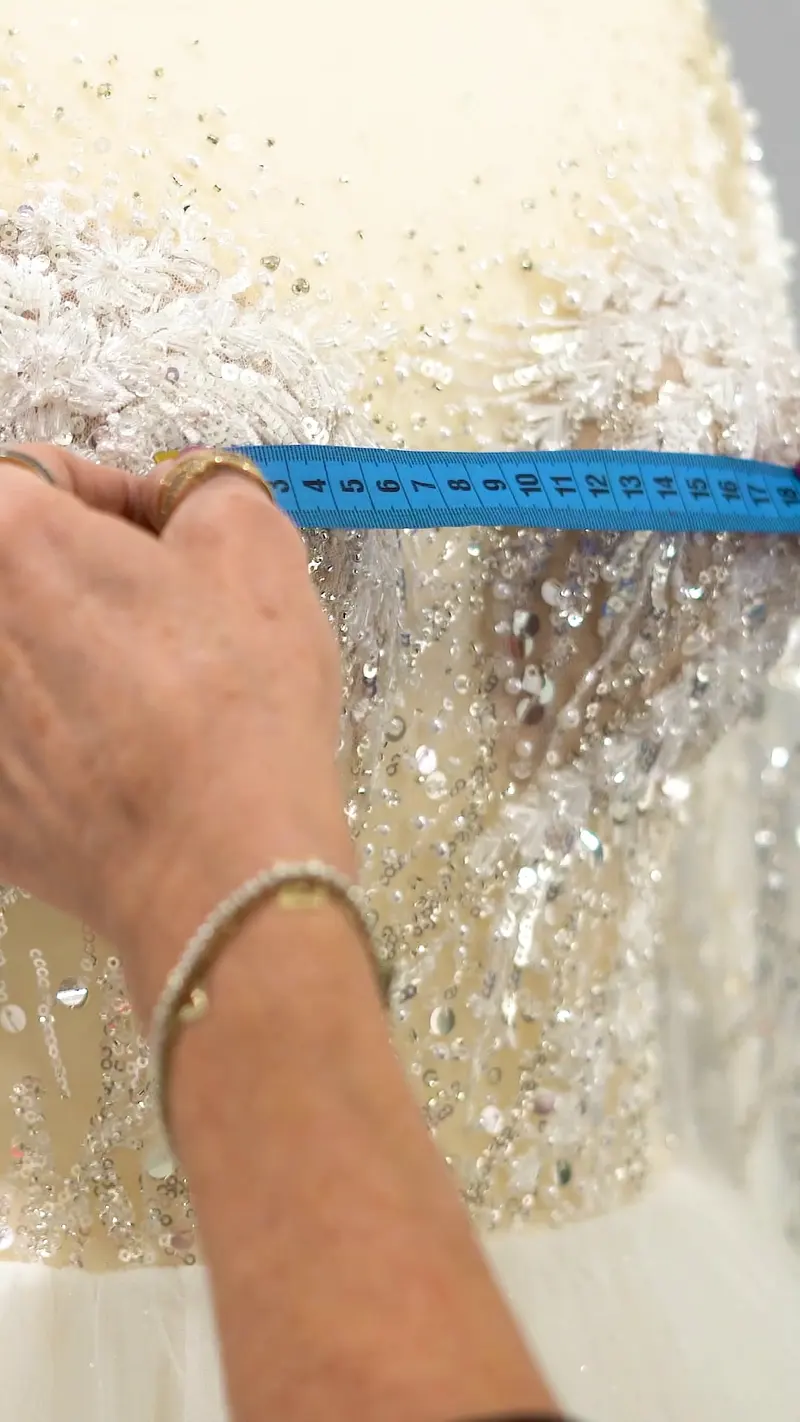
Wedding dress alterations — how long do they take?
Shortening, taking in, changing the fastening. What can be changed and when to come to the studio.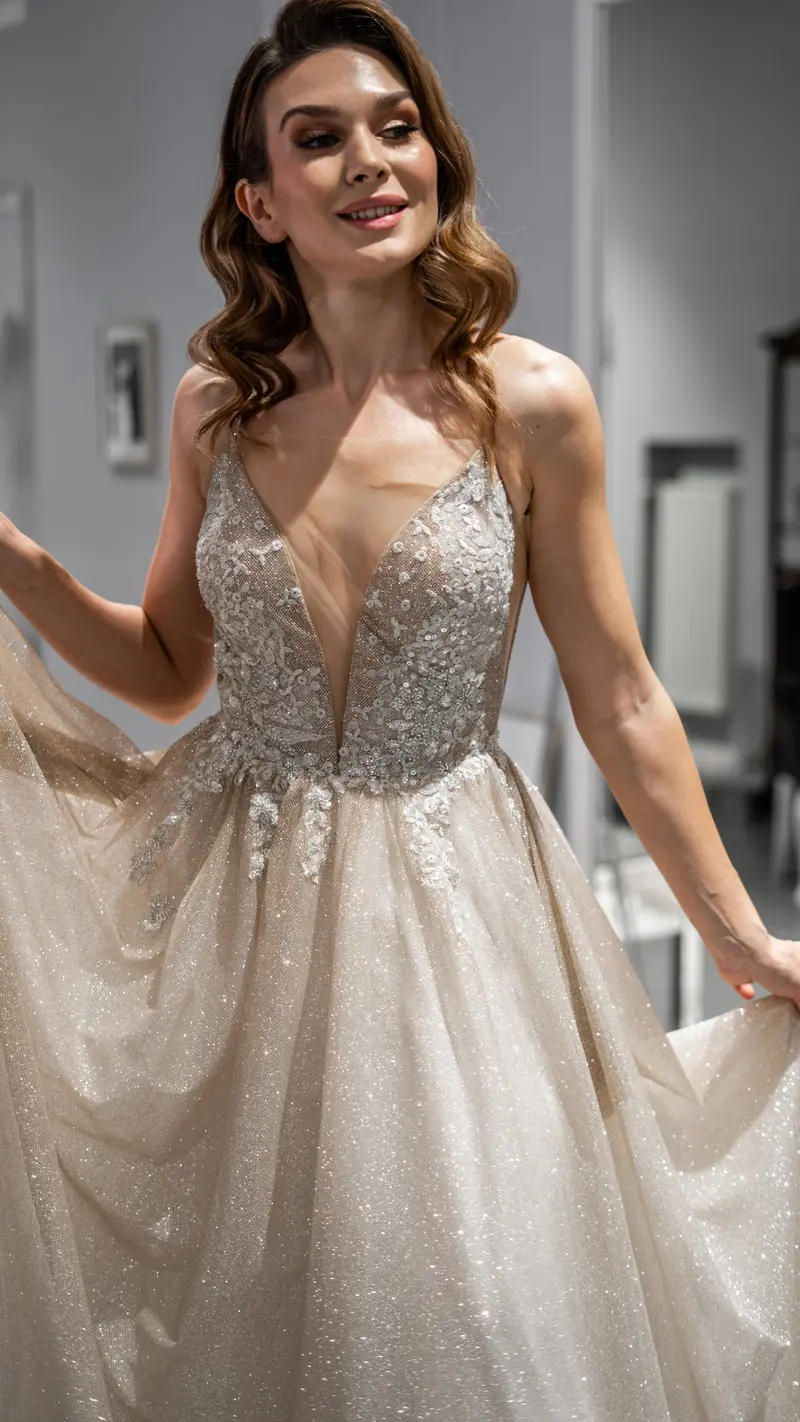
What determines the price of a wedding dress?
Two dresses in a similar style can be priced very differently. Here is what you are actually paying for, which costs beyond the dress are easy to forget, and how to plan your budget without unwelcome surprises.
How to prepare for a wedding dress fitting
Your first fitting is one of the loveliest moments of wedding planning. Here’s how to prepare so you make the most of it — and leave the salon smiling.


