How to choose a wedding veil: lengths, styles and fit
Cathedral, chapel or elbow length? Our tips for matching a veil to your dress, hairstyle and venue.

A veil is the one accessory that can change the whole mood of your look in seconds. The same dress feels light and modern with an elbow-length veil, and grand, almost regal, with a cathedral one. That’s why a veil should never be an afterthought: choose it together with your dress, your hairstyle and your venue. Here is everything our stylists at Mija Loraa in Białystok talk brides through at the mirror, from length and layers to the exact shade of white.
Veil lengths, from shoulder to cathedral
Veil length is measured from where the comb sits, usually at the back of your head. The names are conventions, and the figures below are typical for a bride of around 165–170 cm. If you’re taller or more petite, the same veil will fall somewhere else, so always try the length on yourself.
| Length | Typically | Where it ends | Works best with |
|---|---|---|---|
| Birdcage | 20–30 cm (8–12 in) | over the eyes or half the face | civil ceremonies, retro and minimalist dresses |
| Shoulder | 50–60 cm (20–24 in) | at the shoulders | short and midi dresses, voluminous hairstyles |
| Elbow | 75–80 cm (30–32 in) | around the waist | dresses with a detailed bodice, register office weddings |
| Fingertip | 90–110 cm (36–43 in) | at your fingertips, arms relaxed | almost any silhouette — the safest choice |
| Waltz | 140–160 cm (54–63 in) | between knee and ankle | dancing in your veil, dresses without a train |
| Floor | 180–200 cm (72–78 in) | just above the floor | dresses with no train or a short one |
| Chapel | 230–250 cm (90–100 in) | a little beyond the dress | church weddings, dresses with a train |
| Cathedral | 280–350 cm+ (110–138 in+) | well beyond the train | a formal ceremony in a large church |
A short veil shows off your dress and never gets in the way, but it won’t create much of an entrance. A long one looks breathtaking down the aisle and in photographs, yet it needs secure pinning and a little practice: sitting, kneeling and turning around.
One tier or two?
A single-tier veil is the lightest and sheerest option. It doesn’t hide the back of your dress, adds no bulk and suits any hairstyle — ideal for an open back, a lace back or a row of covered buttons you’d hate to hide.
A two-tier veil has a shorter front layer, the blusher, which covers your face as you walk in and is lifted by your partner or your dad. The second tier also adds volume at the crown, which balances a full, flared skirt. If you love that fullness but don’t want a blusher, ask about a veil gathered at the comb: it looks fuller while staying a single tier.
More and more brides wear two veils: a long one for the ceremony and portraits, then a short one — or none at all — for the reception. A comb comes out in seconds, so the change costs you nothing. It’s handy for a Polish tradition too: at the oczepiny, around midnight, the bride’s veil is ceremonially taken off, so don’t be surprised if your Polish guests are waiting for that moment.
Matching the veil to your dress
The simplest rule: the plainer the dress, the more the veil can say — and the other way round. A glittering, richly embellished gown like the one in our photo looks best with plain tulle and no edging, while a minimalist satin cut is crying out for a lace-edged veil.
- Mermaid and trumpet. A fitted silhouette loves a long, soft veil — floor, chapel or cathedral length — that carries its line further. Avoid stiff tulle, which stands away from you and widens your back. Mermaid dresses with a lace train look beautiful with a veil edged in the same lace.
- Ball gown and A-line. A full skirt needs proportion, so go for fingertip length or a long two-tier veil. A shoulder-length veil over a big skirt often looks too small.
- Boho. A lace mantilla falling loosely from the crown, or a long raw-edge veil that moves with every step.
- Open or lace backs. Choose one sheer tier and pin it below your bun, so the back of the dress stays on show.
- Sleeves or a high neckline. Lots of lace near your face? Keep the veil plain, so the patterns don’t compete.
Still deciding on a silhouette? Start with our guide to wedding dress silhouettes and body shape. A veil is far easier to choose once the cut is settled.
Your veil and your hairstyle
Veil and hair have to work together, so show the veil to your hairdresser before the hair trial — better still, bring it along.
- Low bun — the most versatile base. The comb goes just above or below the bun, and the veil falls smoothly down your back. Perfect for long, heavy veils.
- High bun — the comb sits beneath the bun, so the veil doesn’t cover your hairstyle.
- Hair down or in waves — the comb goes at the crown or the back of the head, anchored with a few hidden grips. Long tulle loves to tangle with loose hair, which is why hairdressers usually set it lightly.
- Tiara, headband or decorative pins — the veil always goes behind or beneath them, never on top.
Mind the weight, too. A cathedral veil with a lace edge can be surprisingly heavy, and a badly anchored comb drags the whole hairstyle backwards. Secure pinning is everything, so ask your hairdresser to take care of it on the day.
Choosing a veil for your venue in Białystok
Catholic church. This is where a long veil truly comes into its own: walking down the aisle in a chapel or cathedral veil is one of the loveliest moments of the day. Check how long the aisle is and whether there are steps, and sweep the veil to one side when you kneel, so you don’t stand on it as you rise.
Orthodox church. Many couples in Podlasie marry in an Orthodox church. The bride’s head is usually covered during the service, and crowns are held above the couple’s heads. A veil pinned low beneath the bun, without much volume at the crown, won’t get in the way — try it with your hairdresser first.
Register office. Wedding rooms at the USC, Poland’s register office, are usually intimate and the ceremony is short, so an elbow or fingertip veil, a birdcage or a mantilla works well. A veil at a civil ceremony is a perfectly natural choice. For more ideas, read our article on the civil wedding dress.
Outdoors. In a garden, by a lake or in the woods, the wind has the final say. A light fingertip or floor-length veil makes for dreamy, airy photos, but it needs firm anchoring. A very long veil soon picks up grass and gravel, so for an outdoor ceremony choose floor length and save the cathedral veil for your portrait session.
Shade and lace
Not all whites are equal. Dresses come in optic white, ivory, champagne and nude, and veil tulle comes in the same shades. There’s one rule: your veil must never be whiter than your dress. A bright white veil next to an ivory gown makes the dress look grubby, while a veil one shade warmer melts into it. Always compare the two side by side, ideally in daylight rather than on a phone screen.
Then pick the tulle and the finish:
- soft tulle drapes fluidly and suits almost everything;
- stiffer tulle holds its shape and works well in shorter veils;
- a raw edge is the most discreet and modern finish;
- satin binding outlines the veil and suits smooth satin dresses;
- a lace edge looks best when it repeats the lace of your dress — two different patterns side by side rarely sit well together;
- pearls, sequins and glitter lift a simple dress that needs a little sparkle.
You don’t have to buy a veil that already carries your dress’s lace. The tailoring studio at our salon can add lace to a plain veil, shorten it or match it to your dress.
When to choose your veil
Once your dress is chosen — usually at one of the fittings after you’ve ordered it, around two to three months before the wedding. Dress, veil and hair should be judged together, and it helps to have the veil with you for your hair trial. If it needs shortening or a lace edge, leave time: alterations like these usually take from a few days to two weeks, longer in wedding season.
Bring your veil, shoes and jewellery to the final fitting, about two to three weeks before the big day. That’s when you’ll see the whole look for the first time, with time left to change something. At the salon you can choose veils, shoes and jewellery on the spot to go with your dress. For more on putting the look together, read our guide to wedding dress accessories.
Want to try several lengths one after another? Book a fitting — the visit is free and takes about 90 minutes, and your stylist will have veils ready for the dresses you love.
FAQ
- #wedding veil
- #cathedral veil
- #veil length
- #bridal accessories
- #bridal hair
- #Białystok
Keep reading
All articles
Wedding dress accessories: shoes, bolero, jewellery
How to put the look together so your accessories enhance the dress rather than compete with it.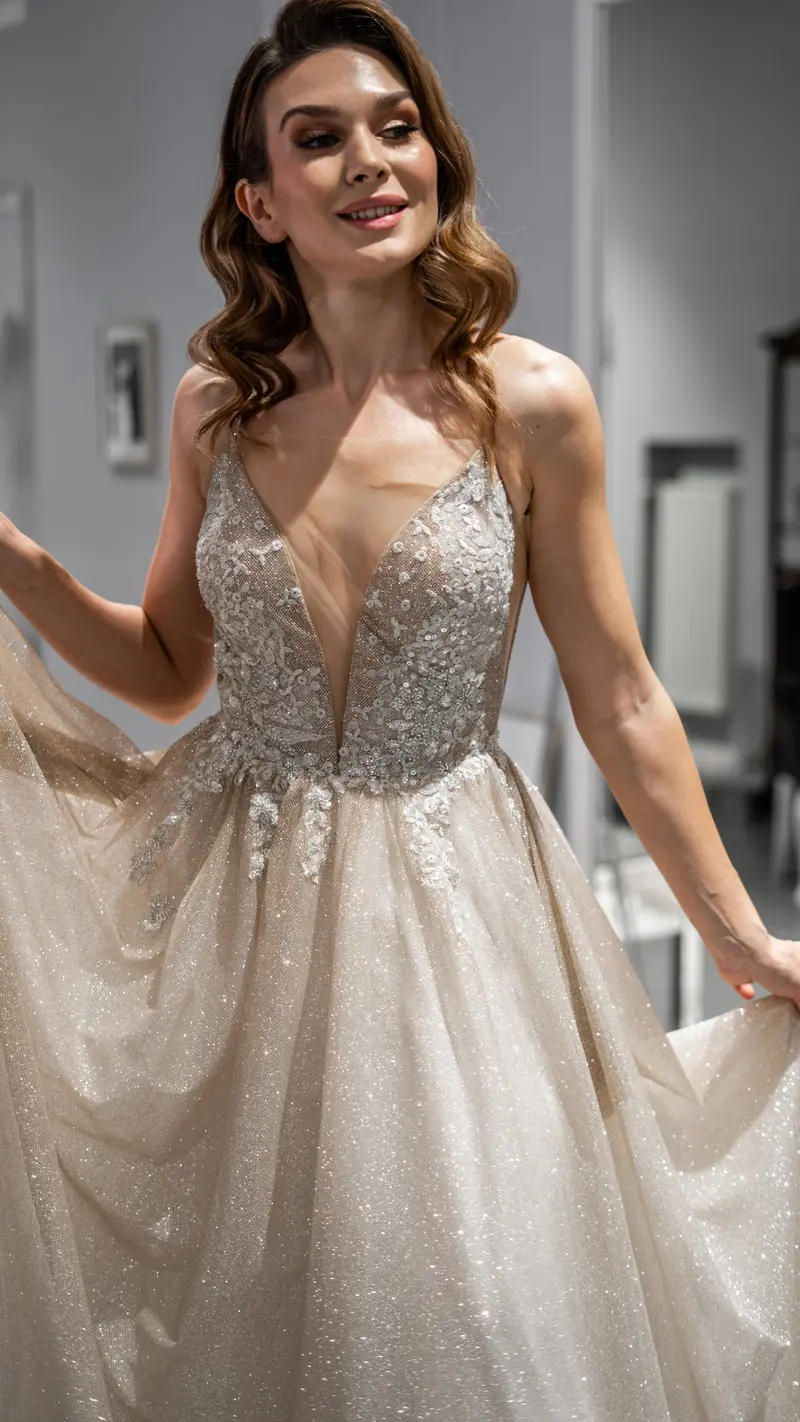
What determines the price of a wedding dress?
Two dresses in a similar style can be priced very differently. Here is what you are actually paying for, which costs beyond the dress are easy to forget, and how to plan your budget without unwelcome surprises.
How to prepare for a wedding dress fitting
Your first fitting is one of the loveliest moments of wedding planning. Here’s how to prepare so you make the most of it — and leave the salon smiling.


